

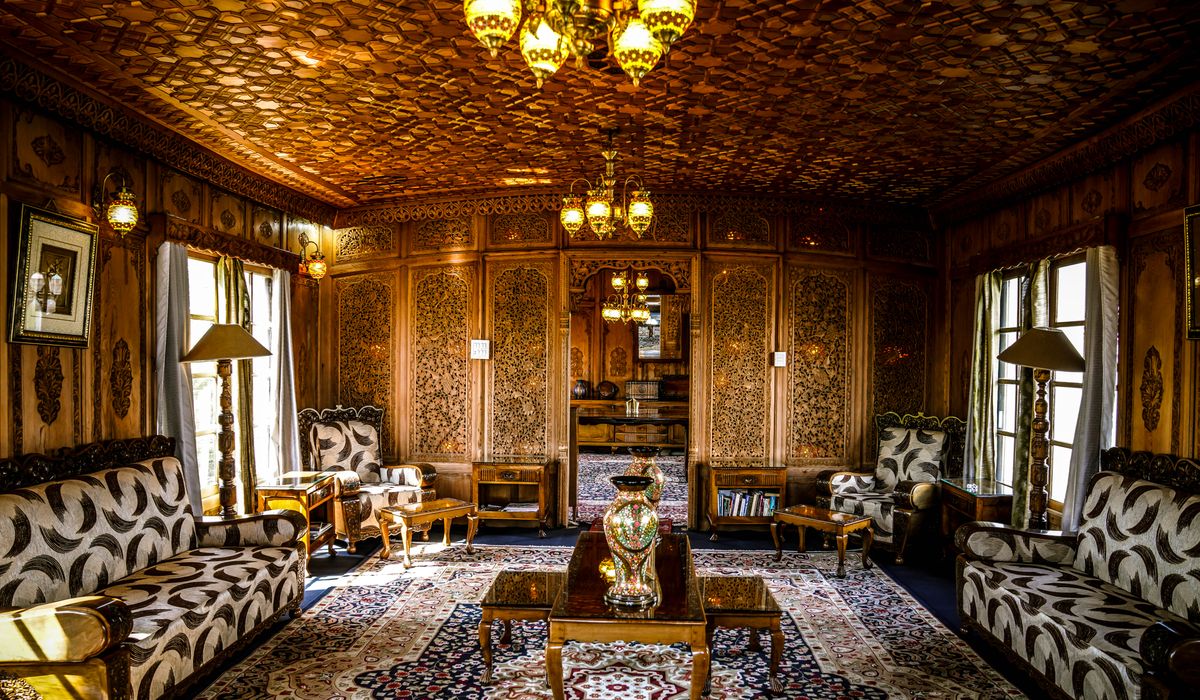
Styling Open Shelves Without Creating Visual Clutter
Why Open Shelves Are Worth the Effort
Open shelving is one of the most rewarding features you can add to a room, and one of the easiest to get wrong. A few carefully placed objects can make a kitchen wall feel airy and lived-in, while a shelf stuffed to the edges simply looks like storage that has escaped. The difference between the two is rarely about how much you own. It is about how you arrange it.
Think of each shelf as a small still life rather than a surface to fill. Once you adopt that mindset, the choices become much simpler: what earns its place, how tall it should stand, and how much empty space it needs around it. Here is how to style open shelves so they read as curated, not cluttered.
Start With a Clear-Out, Not a Shop
Before you buy a single vase, take everything off the shelves and lay it out on the floor or a table. Group it loosely by type: books, ceramics, glassware, framed pictures, small sculptures, plants. You will almost certainly find you have more than the shelves can hold comfortably, and that some pieces do not belong together at all.
Be honest about what you actually love. A shelf filled with things you feel indifferent about will always look busy. Keep the pieces that earn a second glance, and store the rest. If you are styling kitchen shelving, this is also the moment to move everyday items you use constantly into a cupboard within easy reach, and reserve the open shelves for the things you want to look at: cookbooks, a favourite jug, a stack of bowls in a colour you enjoy.
Group in Odd Numbers
Odd numbers are the quiet trick behind most shelves that look effortlessly put together. Three objects gathered as a group feel complete; two can look like a pair waiting for a third, and four often feel symmetrical and static. This is not a rigid rule, but it is a reliable starting point, particularly when you are building a display from scratch.
Try a trio of varied pieces: a tall candlestick, a medium bowl, and a small object such as a stone or a tiny ceramic dish. You can also treat an entire shelf as one group of three — for example, a stack of books, a plant, and a framed print. The eye reads the whole arrangement as a single unit, which is exactly what you want.
Vary Heights and Shapes
Flat, uniform shelving looks dull because nothing draws the eye along it. Contrast is what makes an arrangement feel considered. Mix tall with short, round with angular, glossy with matte.
- Place a tall vase beside a low stack of books to create a gentle step up and down.
- Lean a framed picture against the back wall, then stand a small object in front of it at an angle.
- Combine a rounded bowl with a squared box or a straight-sided candle to stop the shelf feeling repetitive.
- Layer from front to back as well as left to right, so the shelf has depth rather than a single flat row.
If everything on a shelf is roughly the same height, try stacking two or three books under one smaller object to lift it. A few centimetres of extra height is often all it takes to bring a group to life.
Leave Breathing Room
Empty space is a material, and you should use it deliberately. Aim to leave roughly a third of each shelf clear, and keep a visible gap of a few centimetres between separate groups of objects. This is what stops a display from sliding into chaos.
Pay attention to the edges too. Objects pushed hard against the side of a shelf or the wall can make the arrangement feel cramped. Nudge them inwards slightly so there is air on either side. On a run of several shelves, you can also vary the density: a fuller shelf above a sparser one creates rhythm, while keeping every shelf equally packed simply flattens the whole wall.
If you have a long shelf, resist the urge to fill it end to end. Two or three distinct groupings with space between them will always look more elegant than one continuous line of things.
Edit Regularly and Let It Evolve
Good shelving is never finished. Seasons change, you find a new ceramic on a weekend away, and a piece you loved two years ago may now feel tired. Set aside ten minutes every few months to take everything down, dust, and rebuild the display from scratch.
Each time, ask yourself three questions: are the groups in odd numbers, is there enough variety in height, and is there room to breathe? If the answer to all three is yes, the shelves will look calm and intentional. And if something no longer earns its place, that is not a failure — it is simply the next stage of editing, which is what keeps a home feeling alive rather than staged.


Interiors
-
Sanding, priming, and painting can transform a tired chest of drawers into a statement piece, but preparation is the key to a durable finish.
Small Spaces



-

Long established fact that a reader will be distracted
-

Long established fact that a reader will be distracted
-

Long established fact that a reader will be distracted



Styling
Karla Gleichauf
12 May 2017 at 05:28 pm
On the other hand, we denounce with righteous indignation and dislike men who are so beguiled and demoralized by the charms of pleasure of the moment
M Shyamalan
12 May 2017 at 05:28 pm
On the other hand, we denounce with righteous indignation and dislike men who are so beguiled and demoralized by the charms of pleasure of the moment
Liz Montano
12 May 2017 at 05:28 pm
On the other hand, we denounce with righteous indignation and dislike men who are so beguiled and demoralized by the charms of pleasure of the moment